
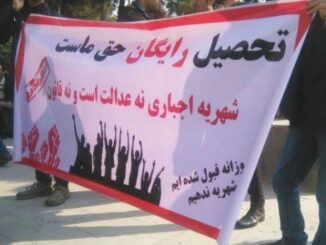
Protests at Iranian universities continue to escalate as the anniversary of the “Dey” (January) uprising approaches. On February 2nd, pharmacy students at Tabriz University’s Faculty of Dentistry launched a significant protest and sit-in. The students held a memorial for those killed during recent unrest and issued a formal demand for the unconditional release of all detained students, including their colleagues from Tabriz University. Chanting the slogan “The student dies but does not accept humiliation,” the protesters emphasized their commitment to resisting state suppression.
Similar scenes unfolded at Azad University of Mashhad, where nursing and midwifery students gathered in front of the campus security office. They honoured Faezeh Hossein-Nejad, a freshman student killed by government forces on January 9th in Mashhad. These academic protests coincide with a wave of civil unrest among Social Security retirees, who held demonstrations in Tehran, Ahvaz, Rasht, and Shush to protest economic hardship and government violence.
Calls for Accountability and Justice
The families of those killed in Malekshahi, Ilam province, have issued a defiant statement demanding the prosecution of those responsible for the deaths of five local citizens: Latif Karimi, Mohammad Reza Karami, Mehdi Imamipour, Reza Azimzadeh, and Mohsen (Fares) Mohammadi.
- Direct Allegations: The families claim evidence proves the shots were fired from the local IRGC building.
- Responsibility: They specifically named Rasoul Moradian, the IRGC commander of Malekshahi, as the primary person responsible.
- International Recourse: The signatories warned that if domestic legal paths remain blocked, they will take their case to international human rights courts.
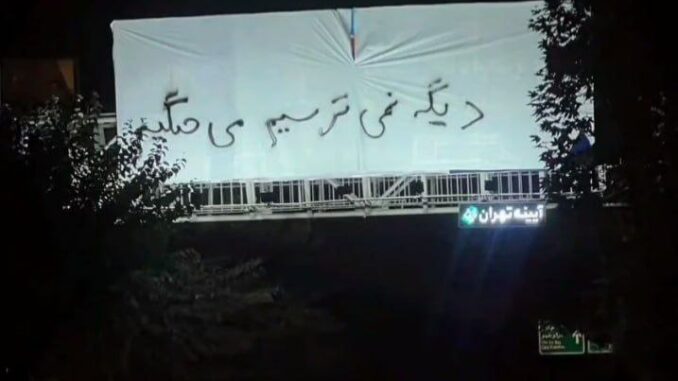
In a symbolic act of solidarity, activists in Tehran neighbourhoods like Nazi Abad and Narmak spent last night plastering walls with memorial posters of the “Dey” uprising victims, signalling that the movement for justice remains active despite the heavy security presence.
International Response and Sanctions
Global pressure on the Islamic Republic is mounting in response to reports of “criminal suppression.”
- Medical Solidarity: The German Medical Association, led by Klaus Reinhardt, issued a statement demanding the immediate release of Iranian doctors and medical staff arrested for treating injured protesters. They called for “safe conditions” for medical workers to fulfil their ethical duties without fear of reprisal.
- UK Sanctions: On February 1st, the United Kingdom expanded its sanctions list to include 10 high-ranking officials and one security entity for “serious human rights violations.”
- Key Figures Sanctioned: Eskandar Momeni (Minister of Interior), Mohammad Reza Hashemifar (Police Chief of Lorestan), and the Law Enforcement Command (FARAJA).
- Business Links: Businessman Babak Zanjani was also targeted for his role in funding the IRGC’s activities.
The uprising has fundamentally shifted international diplomacy, leading the European Union to place the IRGC on its global terrorism list. Activists continue to call for a total global boycott of the regime and for all its leaders to be designated as terrorists.
Worker-communist Party of Iran
3 February 2026
Be the first to comment