
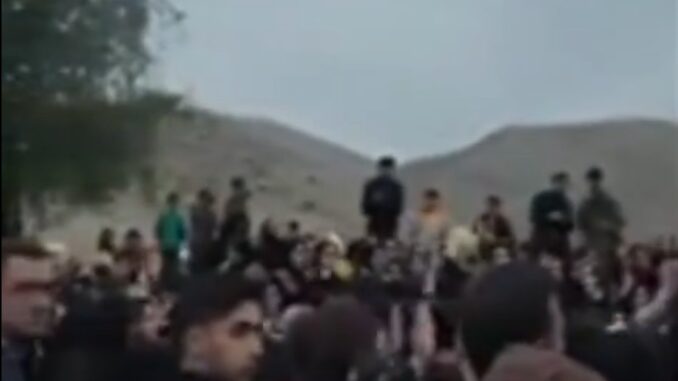
Mass memorials for those killed in the January massacre are spreading across Iran, with thousands gathering at gravesites, chanting against the regime, and turning ceremonies into powerful acts of collective defiance. Nightly cries of “Death to the dictator” echo from rooftops in major cities, while calls for nationwide work stoppages on 17–18 February mark the fortieth day since the killings. The message is clear: society has not forgotten, will not retreat, and demands justice, international boycott of the regime, and prosecution of its leaders.
Mass commemorations across Iran honour the January victims as nightly anti-regime slogans echo nationwide
Glory to the memory of all those killed in January
More than a month has passed since the Islamic regime’s mass killing of protesters in January, and large commemorations for the tens of thousands killed in this criminal genocide are now taking place across Iran. In several cities, justice-seeking families who have lost loved ones are holding joint memorials, which have become gatherings of widespread public participation.
On Friday 13 February, a joint memorial for Sina Faraji, Mojtaba Rezvani, Mehdi Hassami and Amir Ebrahimnejad was held in Rostamkol (Behshahr), and the fortieth-day ceremony for Omid Zare was held in Rostamabad amid collective grief and anger. Large crowds attended.
On Thursday 12 February, memorials were also held for a number of those killed in January, including Raha Bahloulipour, an Italian language student at the University of Tehran, in Firouzabad; the fortieth day of the state murder of Reyhaneh Qodsi in Hamedan; a memorial for Mohammad Ahmadi in Nurabad-e Mamasani; the fortieth day of Iman Shekari; and the burial of 35-year-old Abbas Rashidi in Semirom, where mourners chanted:
- “Until the cleric is shrouded, this homeland will not be a homeland,”
- “Death to Khamenei,”
- “I will kill whoever killed my brother.”
In a particularly shocking case, Abbas Rashidi was shot with pellet rounds during the 7 January protests in Semirom. After being injured and secretly taken out of the city, he was pressured by security forces through threats against his family and forced to report to a police station in Isfahan on 4 February. Five days later, his body was handed to his family at Behesht-e Rezvan cemetery in Isfahan.
Rouzbeh Safari, shot with more than 200 pellet rounds while defending his wife during the evening protests of 8 January, was hidden by his family for fear of arrest and denied hospital treatment. After twenty days without proper medical care, he died from his wounds and infection. At his third-day memorial, participants chanted:
- “I will kill whoever killed my brother,”
- “For every one killed, a thousand stand behind.”
These memorials — marked by mass participation and what many described as a dance of grief and defiance — reflect the determination of a justice-seeking society of ninety million that will bring down the regime of criminals.
Mahsa (Jina) Amini’s mother, protesting the January massacre, wrote: “I mourn for an Iran in mourning,” expressing solidarity with mothers and families whose children were killed by live bullets, pellets and torture.
Alongside the fortieth-day memorials, nightly anti-regime slogan-shouting took place on 14 February in cities including Tehran, Shiraz, Kermanshah and Karaj, with chants of “Death to Khamenei” and “Death to the dictator.” These actions demonstrate the growing resolve of a mass movement determined to end the rule of this criminal government.
The Worker-communist Party calls for widespread participation in commemorations and for anti-regime slogans to be raised in every city. Numerous calls have also been issued for work stoppages on 17 and 18 February to mark the fortieth day since the January killings. In a joint statement, the Worker-communist Party and the Communist Party of Iran have called for a strike on those two days, urging:
“Wherever we are, on those two days let us stop work and gather at the graves of the brave heroes of freedom. Let us applaud in their honour and raise slogans.”
The nationwide “Woman, Life, Freedom” network has likewise called for a general strike and coordinated protest actions to coincide with the fortieth day of those killed on 7 and 8 January 2026.
The demand of the people of Iran is clear: the leaders of the Islamic regime must be tried for genocide and all their crimes. The Islamic Republic must be boycotted internationally, expelled from global institutions, and its leaders brought to justice.
Worker-communist Party of Iran
14 February 2026
Be the first to comment