War – Bulletin No.6 – 13 March 2026
The Islamic Revolutionary Guard Corps (IRGC) has declared in a statement: “If street protests occur, we will deliver a blow even harsher than that of 8 January. Any movement that disrupts security will be considered direct cooperation with the enemy and will be met with the iron fist of the IRGC Intelligence Organisation.” Police commander Radan had earlier said that the authorities would treat protesting people in the same way they treat the enemy. Several other commanders of the regime have issued similar threats in recent days.
A government that has even the slightest confidence in its future, or the slightest sense of strength and stability, does not speak to its people in this way. This is the mark of a government that sees no future for itself — the sign of a regime that has reached the end of the line.
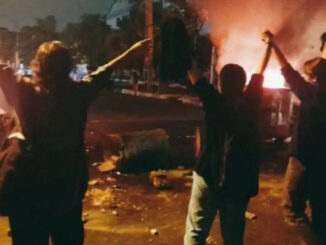
The IRGC and the regime’s officials have no doubt that even if they survive the war, they will not survive the people. Each time the people have risen up they have paid a heavy price — many killed and many more imprisoned — yet uprisings, protests and struggles have continued on an even broader scale.
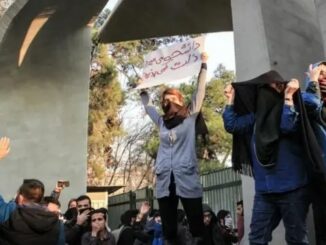
The war began at a time when the horrific massacre of January (Dey) — which these criminals openly boast about — had already filled Iranian society and people across the world with anger, hatred and revulsion toward the Islamic regime. This crime and the regime’s many other crimes will not be forgotten. On the contrary, people — women and men, young and old — are determined to bring this government down. Only a few weeks after that massacre, a new wave of protests erupted in universities and at memorial ceremonies for those killed, where the slogans “Death to Khamenei” and “Death to the Islamic Republic” rang out. These struggles will not only continue; they will expand even further.
The regime knows that if it retreats or surrenders it will be placed in a position where its very survival will be questioned by the same people it has massacred. In January (Dey), protesting people were killed in the streets, in prisons and in hospitals by the regime’s executioners, and they correctly hold the Islamic Republic responsible for the present war as well. Even under bombardment that killed its leader and severely weakened its military apparatus, the regime does not forget that its main enemy is inside the country, and it continues to threaten them daily. But the people too have long declared that their enemy is right here at home.
Another audience for the IRGC’s threats is critics within the regime itself. The authorities know that after Khamenei’s death, internal factional conflicts will intensify and the ground will become more favourable for a popular uprising. Through these threats they are trying to silence any dissent at the top as well. But a regime struggling amid deep crises — crises that the war has multiplied tenfold — will not be able to silence its internal critics either.
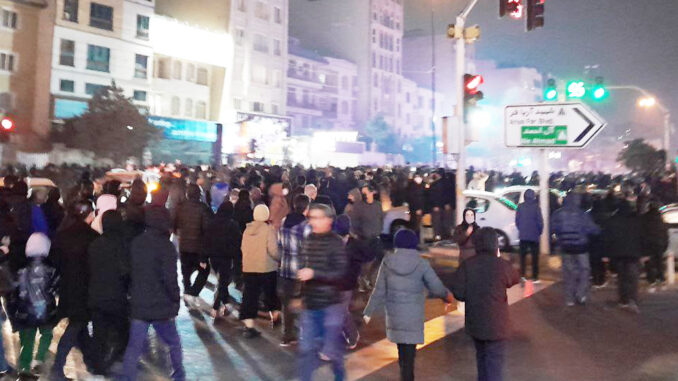
The regime now needs threats more than ever to maintain a façade of strength. In this way it hopes both to intimidate the people and to prevent its own forces from feeling fear. In reality, these threats are a sign of breakdown and of fear of what will come after the war — fear of a people who have nothing left to lose and who, even in the midst of war, have protested wherever they could against the presence of military forces in their neighbourhoods. These protests will grow as the war continues.
Worker-communist Party of Iran
13 March 2026