
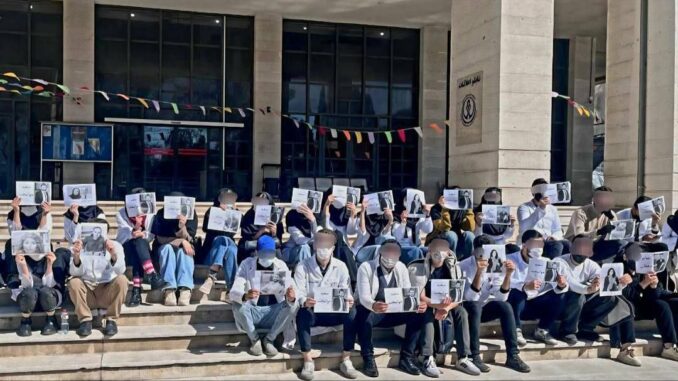
Protests and workers actions continue across Iran, spanning oil refineries, universities, and public memorials, as opposition to state murder and repression intensifies.
Two-day strike by workers at Assaluyeh refinery
According to reports, workers at Phase 10 of the Assaluyeh refinery complex in South Pars carried out a two-day strike on 4 and 5 February. The strike was in protest against the removal of overtime pay and severe overcrowding in workers’ dormitories.
Workers report that parts of their recorded overtime have been cut, while the number of people sharing dormitory rooms has increased, leading to loss of rest and deteriorating hygienic conditions. The Assaluyeh refinery has become one of the major centres of labour protest in Iran’s oil and gas sector.
Memorials become spaces for justice-seeking
On 6 February, a memorial ceremony was held at the gravesite of Abolfazl Heydari, who was killed by security forces during the nationwide protests of 8 January 2026. The ceremony was attended by his family, relatives, and a large number of people, who expressed their outrage at the killers of Iran’s people.
Across the country, memorial gatherings have increasingly turned into collective acts of justice-seeking, with participants demanding the prosecution of senior state officials responsible for state murder and repression.
Universities as key strongholds of protest
University protests have spread nationwide, with campuses becoming major centres of resistance against the crimes of the Islamic Republic and demands for accountability.
In addition to boycotting end-of-term exams, students have organised protest gatherings at universities including:
- Ferdowsi University of Mashhad
- Shiraz University
- Tabriz University
- Jundishapur University of Ahvaz
On 6 February, students at Iran University of Medical Sciences also held a protest gathering. Reports indicate that campus security forces violently dispersed the student sit-in. Students stated that while they were protesting and expressing solidarity with victims, security personnel told them: “Go mourn at their graves.”
Ongoing protests at Shiraz University of Medical Sciences
Student protests at Shiraz University of Medical Sciences continued for a fifth consecutive day. Students held demonstrations to condemn the crimes of the Islamic Republic and to commemorate their murdered classmates.
According to reports, at least 86 students were killed during the January protests. Protesters chanted slogans including:
- “Imprisoned students must be freed”
- “Saeed Javanbakht must be freed”
- “A student may die, but will not accept humiliation”
Another report confirms that Saeed Javanbakht, a medical intern in Shiraz, was arrested for providing medical assistance to injured protesters and remains imprisoned.
Lawyers declare support for the people
In a separate development, 48 lawyers issued a statement declaring that they will not hesitate for a moment in defending the rights of the people of Iran.
Worker-communist Party of Iran
6 February 2026
Be the first to comment