
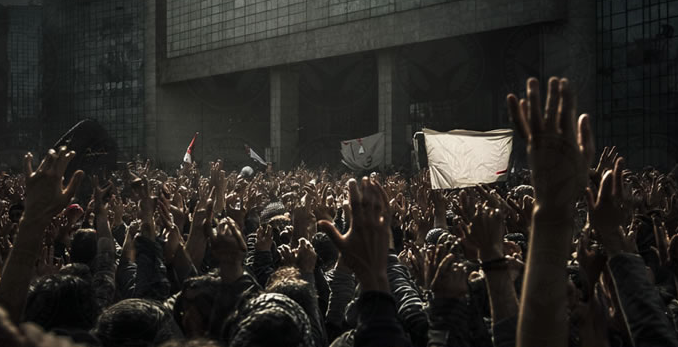
In late December 2025, Iran entered a new and decisive phase of the Woman, Life, Freedom revolution. Protests initially erupted following strikes by Tehran’s bazaar and demonstrations against extreme inflation and deteriorating living conditions. These actions quickly escalated beyond economic grievances, developing into nationwide protests directly challenging the Islamic Republic. Within days, chants calling for the overthrow of the regime were heard across major cities and provincial towns.
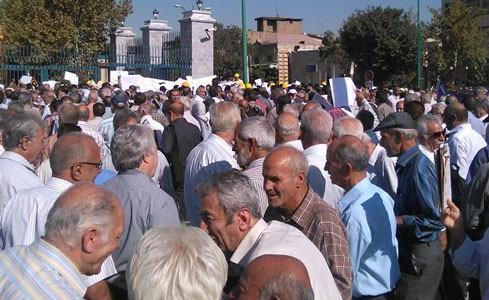
By early January 2026, the uprising had spread to nearly 200 locations nationwide. Workers, students, pensioners, teachers, nurses, truck drivers, and bazaar merchants joined street protests and strikes, while night-time demonstrations and local confrontations with security forces became widespread. The scale and speed of this expansion reflected deep social anger and a broad consensus that existing political and economic conditions had become intolerable.
On 8-9 January, the authorities launched a large-scale and coordinated offensive on the people. The security forces used live ammunition in multiple cities, even machine guns, killing thousands over the course of two days and arresting tens of thousands more. Families reported withheld bodies, forced night burials, and widespread intimidation. At the same time, the government imposed a near-total internet shutdown, including disruptions to satellite connectivity, severely restricting access to information. These measures underscored the state’s reliance on violence and isolation to maintain control.
Rather than ending the uprising, the repression altered its form. From mid-January onwards, funerals and memorial ceremonies for those killed became focal points of protest. Across the country, these gatherings drew large crowds and frequently turned into demonstrations demanding justice and accountability. Night-time protests, strikes, and local organising continued, while neighbourhood networks played an increasing role in sharing information, providing mutual aid, and sustaining mobilisation under conditions of surveillance and blackout.
During this period, efforts to appropriate or redirect the protests through media manipulation and claims of imposed leadership were widely rejected. The dominant slogans and practices of the movement continued to emphasise unity against dictatorship, opposition to repression and corruption, and commitment to the principles of Woman, Life, Freedom.
By late January 2026, Iran remained in a state of sustained confrontation between a society in revolt and a government that is clinging to power only by mass bloodletting. Despite severe repression, exhaustion, and loss of life, protests and strikes persisted, and international attention intensified. The events of this period highlighted both the scale of state violence and the resilience of a population determined to continue its struggle for freedom, equality, and a dignified human life.
The scale of violence used to suppress the uprising has been extraordinary. Credible assessments contained in statements issued in mid-January 2026 indicate that the number of people killed during the crackdown is estimated to exceed 20,000, with the majority of deaths occurring during 8–9 January 2026, when security forces opened fire on protesters in many cities.
Thousands more were injured, and tens of thousands were arrested under conditions that include torture, enforced disappearances, and the threat of execution.
These killings were carried out alongside near-total internet shutdowns and coordinated efforts to isolate the population, conceal the scale of the violence, and intimidate the families of victims. Senior state officials publicly framed protesters as enemies of the state and instructed judicial and security bodies to intensify repression. The combination of mass killings, systematic arrests, and information blackouts points to a deliberate policy aimed at crushing a society-wide uprising through terror.
Despite this, protests, strikes, and memorial gatherings have continued, and calls for justice and accountability have grown louder both inside Iran and internationally. The events of late December 2025 and January 2026 represent not only one of the deadliest episodes of repression in the history of the Islamic Republic, but also a critical moment in Iran’s ongoing struggle for freedom, equality, and human dignity.
Chronological summary of the events in Iran
Late December 2025 – Late January 2026
Late December 2025: emergence of a new uprising
- Protests begin in late December 2025, following the economic decline and unbearable financial pressure on the people. This uprising is a continuation and a new phase of the “Woman, Life, Freedom” revolution.
- Initial actions include night-time chanting, small street gatherings, and hit-and-run confrontations with security forces.
- Early slogans already target the core of the regime, including “Death to the dictator” and “Death to Khamenei”.
- Protests appear simultaneously in Tehran and several provincial cities, indicating early nationwide spread rather than a local incident
1–7 January 2026: rapid nationwide expansion
- In the first days of January, protests expand rapidly across Iran.
- Demonstrations and clashes are reported in dozens of cities, soon rising to nearly 200 cities nationwide.
- Cities mentioned include Tehran, Mashhad, Shiraz, Isfahan, Tabriz, Ahvaz, Kermanshah, Karaj, Urmia, Sanandaj, Zahedan, Qom, Rasht, Kerman, Saqqez, Abdanan, and others.
- Protest tactics escalate:
- Street occupations
- Burning of banks, municipalities, mosques, and symbols of state authority
- Attacks on Basij bases
- In several locations, protesters drive repression forces back and temporarily take control of neighbourhoods or towns.
- The uprising is described as moving beyond protest into a nationwide revolt aimed at overthrowing the Islamic Republic
8–9 January 2026: massacre and nationwide bloodshed
- 8 and 9 January 2026 are repeatedly identified as a historic and catastrophic turning point.
- The Islamic Republic launches a massive, coordinated crackdown using:
- Live ammunition
- Heavy weapons
- Large-scale mass arrests
- According to the file:
- Thousands of protesters are killed within two days
- Killings occur across many cities simultaneously
- Reports describe:
- Streets “running with blood”
- Entire neighbourhoods coming under direct fire
- Children, teenagers, and young adults among the dead
- The state immediately moves to conceal the scale of killings, withholding bodies and pressuring families.
- This period is repeatedly referred to as a massacre and genocide
9–10 January 2026: terror, arrests, and suppression measures
- Following the massacre:
- Tens of thousands are arrested
- Detention centres, including Kahrizak, are reported to be holding large numbers of detainees
- Families search for missing loved ones, many without information on whether they are alive or dead.
- Authorities impose severe security lockdowns in major cities.
- Funerals begin under heavy surveillance, with some burials forced to take place at night.
- Despite repression, protests continue, particularly at night, in Tehran, Karaj, Mashhad, Shiraz, and other cities
11–13 January 2026: internet blackout and continued resistance
- The government enforces a near-total nationwide internet shutdown, later extending it to satellite internet disruption.
- News flow slows dramatically, but reports still emerge showing:
- Night-time protests in 30+ neighbourhoods of Tehran
- Protests in 22+ additional cities
- Funerals at Behesht-e Zahra cemetery in Tehran turn into mass protests with chants of:
- “Death to Khamenei”
- “Death to the dictator”
- Memorials in cities such as Abdanan, Isfahan, and Khuzestan also turn into protests.
- State officials publicly threaten harsher repression, warning that even calling for strikes or protests is a crime
14–16 January 2026: renewed mass protests and strikes
- Protests surge again in several key cities, including Zahedan, described as a major centre of resistance.
- Large demonstrations chant:
- “Khamenei is a murderer”
- “Cannons, tanks, fireworks—clerics must disappear”
- Strikes expand, including:
- Bazaar closures
- Truck drivers joining protests
- Workers in multiple cities halting work
- Universities close dormitories, signalling fear of student mobilisation.
- Reports emerge of defections and fear within repression forces, alongside official threats to prevent desertion
17–20 January 2026: memorials become centres of revolt
- Memorial ceremonies for those killed become the central form of mass mobilisation.
- Large crowds gather despite threats, martial-law conditions, and intimidation.
- Across multiple cities:
- Funerals turn into demonstrations
- Religious mourning rituals are deliberately rejected
- Clapping, dancing, and chanting replace traditional ceremonies
- Families publicly accuse the IRGC, Basij, and police of killings.
- Slogans include:
- “We neither forgive nor forget”
- “Death to the dictator”
- These gatherings are described as collective indictments of the regime
Late January 2026: exposure, solidarity, and ongoing revolt
- Partial restoration of internet access reveals:
- Names and identities of many victims
- Widespread evidence of killings and repression
- International reaction grows:
- Trade unions, human-rights organisations, UN bodies, and public figures issue statements of solidarity
- Calls emerge for international investigations and prosecution of Iranian officials
- Inside Iran:
- Night-time protests continue
- Neighbourhood networks expand to spread information and provide mutual aid
- Strikes and protests persist despite exhaustion and repression
Be the first to comment