
By Hamid Taqvaee – 6 April 2026
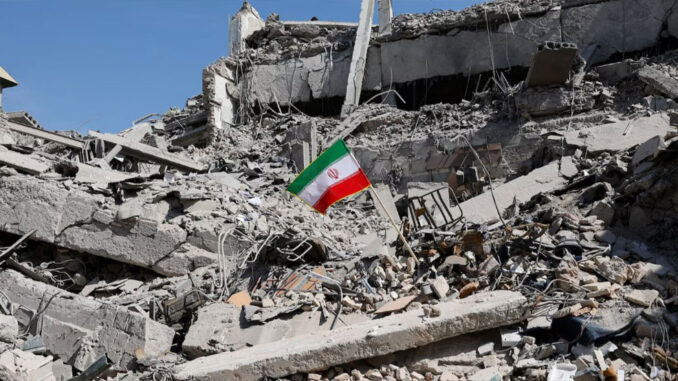
The latest reports indicate that a proposed 45-day ceasefire by mediating countries has been rejected by both Trump and the Islamic Republic. At the same time, Trump has announced that his deadline for “targeting bridges and power plants” in Iran will not be extended, with the final deadline set for Tuesday at 8 pm Washington time.
This situation has prompted renewed activity among anti-war forces. From condemning the bombing of bridges and power plants to calls for an unconditional ceasefire, and opposition to attacks on infrastructure, these have become central topics of discussion.
In relation to these developments, the following points must be emphasised:
- As far as “public opinion” is concerned, there is no reliable data on what people think. Claims made in the name of “the people” must be evaluated and critically assessed. Moreover, under internet shutdown conditions, public opinion cannot be gauged through individual messages or contacts. To understand what people think (not necessarily what is correct), the internet must be free. The very fact that the regime has shut down the internet indicates that public sentiment is more against the regime than against the war. If the internet were open, the dominant atmosphere would be anti-regime, not anti-US or anti-Israel. The regime would have to be foolish to block internet access for people suffering from war and opposed to military attacks—but it is not foolish; it has shut it down precisely because it knows that a free online space would echo the slogan: “Our enemy is right here—they lie when they say it’s America.”
- A significant section of society is rightly concerned about the war ending while the Islamic Republic remains in power. The January massacres and apocalyptic atmosphere, the escalation of executions and arrests during wartime, the establishment of checkpoints and street patrols, and the deployment of militias such as Hashd al-Shaabi, Fatemiyoun and Zeynabiyoun—all point to preparations for a large-scale crackdown on protesting people during and after the war. This is why people are concerned about the survival of the regime—not about infrastructure. People want the overthrow of the Islamic Republic and assess the course of the war based on how close it brings the regime to collapse—not on whether infrastructure is spared. This assessment is entirely correct.
- It must not be forgotten that the current war, like the previous 12-day war, is rooted in the regime’s anti-West and anti-Israel policies—specifically its nuclear programme, support for proxy forces, and development of long-range missiles. It requires no deep analysis to understand that if the Islamic Republic had accepted US conditions to abandon these policies—which the people of Iran also oppose—neither the previous war nor the current one would have occurred. Conversely, if the regime continues these policies, even if this war ends, the conditions for further conflicts will remain.
- Beyond its overall war-driven strategy, the Islamic Republic is also directly responsible for the continuation of the current war. It refuses to reopen the Strait of Hormuz, dismisses ceasefire proposals, and even attacks initiatives—such as those associated with Zarif—that imply reconsidering its anti-Western stance. The regime is both the strategic cause of this war and, in practical terms, a driving force behind its continuation and persistence.
- The present war unfolds within a deeper, fundamental conflict between the people and the ruling criminals. Revolutionary forces engaged in this second struggle must not lose sight of the central goal: the overthrow of the regime. The issue is not a “fifty-fifty” balance. Ending the war will not overthrow the regime—but overthrowing the regime will not only end this war, it will remove the basis for future wars. Anyone who seeks peace must support overthrow. Any revolutionary force claiming to defend the people must, even in wartime conditions, make the overthrow of the Islamic Republic the core objective of its politics.
- The Islamic Republic refuses to yield to US and Israeli demands because hostility toward the US and Israel is embedded in its identity and existence. This hostility—rooted in deeply reactionary and anti-human politics—is both a pillar of the regime’s identity and a tool for suppressing “internal unrest.” This is precisely why the masses and revolutionary forces oppose the regime’s anti-Western policies. The slogan “Our enemy is right here—they lie when they say it’s America” reflects this sentiment.
- In light of the above, the overthrow of the Islamic Republic is the only fundamental, lasting solution to ending the current war and preventing future ones. Without the regime’s overthrow, neither Iran nor the region will see peace. From the standpoint of the people’s interests, the best outcome of this war is the complete collapse of the regime. If that does not occur, the second-best scenario is the regime’s unconditional surrender—accepting US demands. Even in that case, abandoning its anti-Western policies would accelerate the regime’s eventual overthrow by a people’s revolution.
6 April 2026