In this interview, Keyvan Javid emphasises that the 39-day war by the United States and Israel against the Islamic Republic is not only not condemnable, but could have been part of the continuation of the people of Iran’s struggle for overthrow. He sees the Islamic Republic as the main enemy of the people of Iran and says military blows against the regime can weaken it and create opportunities for the struggle to overthrow it; at the same time, any harm to civilians must be exposed and condemned. The main message is that the overthrow of the Islamic Republic depends above all on the organised struggle of the people, not on anti-war slogans that in practice benefit the regime.
Asghar Farhadi and the killing of innocent people
Hanieh Nematollahi’s interview with Keyvan Javid, director of New Channel TV
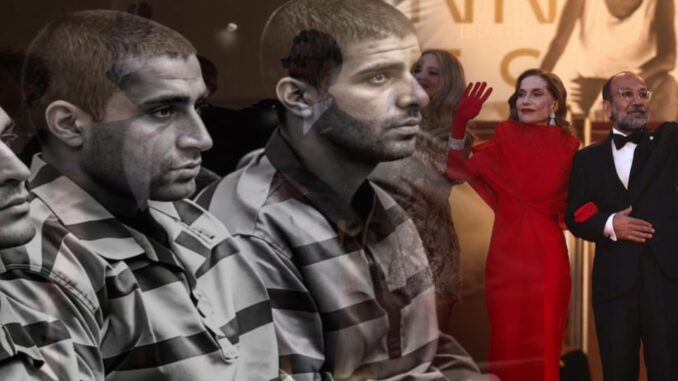
Asghar Farhadi, the well-known Iranian filmmaker, said at a press conference for the film Parallel Stories at the Cannes Film Festival that opposing the killing of innocent people and civilians in war does not mean agreeing with the killing of protesters.
Hanieh Nematollahi: What is your view of Mr Asghar Farhadi’s comment?
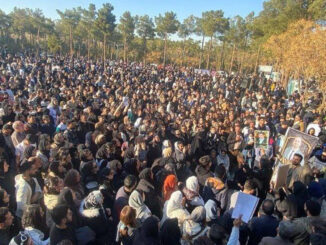
Keyvan Javid: This is a policy that in Persian is described as trying to make sure “neither the skewer burns nor the kebab.” On the one hand, no one can avoid condemning the killing of the people of Iran by the Islamic regime. Some of the largest massacres have taken place in Iran. In January 2026, something almost unprecedented happened: so many people were killed by a government in just two days. No one can remain silent in the face of this. The world cannot be indifferent or refuse to condemn it and still call itself honourable. So they are forced to say something about these killings.
Now, someone like Mr Farhadi may say a little, while others enter the field with all their strength against these massacres. European governments, too, speak in a way that does not damage their relations with the Islamic Republic too much, and they place it alongside the issue of war.
First of all, in the 39-day war by the United States and Israel against the Islamic Republic, a large number of people were not killed, and the aim and policy of the United States and Israel was not to kill the people of Iran. It is clear that they have committed crimes elsewhere, such as in Gaza, and those crimes are condemnable; we strongly condemned that criminal policy at the time. But in relation to Iran, their policy was not to kill people in Iran, partly so that people would have a greater opportunity to come onto the scene against the Islamic Republic.
Even where some people were killed, that too was the result of the criminal policy of the Islamic Republic, which placed its military weapons and missiles right next to residential areas. Even in the case of the schoolchildren killed in Minab, the school was directly connected to the Islamic Republic’s military centres. So if someone comes and says war is bad and people were killed, they should compare the deaths in this 39-day war with the number of people killed and executed by the Islamic Republic.
Even if someone mistakenly kills one person in a war, they are responsible. For that reason, one must be vigilant and criticise, expose and condemn the side responsible for that killing. But these matters are not equal in weight. A woman went to Reza Pahlavi’s press conference — I am not dealing here with Reza Pahlavi or his politics — and objected, saying shame on you, so many people were killed in the war and you… But she forgot to say there that tens of thousands of people were killed by the Islamic Republic in two days.
This anti-war movement is not just about compassion. In practice, through its politics, it supports the Islamic Republic. Of course, there may be good people among them who do not know the situation in Iran, or whose anti-American politics leads them simply to say they are against war. But anyone who raises an anti-war slogan in these conditions brings joy to the Islamic Republic. If the aim of the United States and Israel had been to kill people in Iran, then over these 40 days we should have seen at least 100,000 people killed.
Hanieh Nematollahi: How do you assess the war by the United States and Israel against the Islamic Republic? Is it condemnable or should it be supported?
Keyvan Javid: In my view, it is not condemnable. This war could have been part of the continuation of the people of Iran’s struggle to overthrow the regime. It is not the case that every war in the world must automatically be condemned. Who condemns the governments that fought against Hitler in the Second World War? The states involved in that war — Britain, France, the United States and the former Soviet Union — mobilised against Hitler. Many people were killed in that war, including many German civilians in Allied attacks. During the retreat, the German army destroyed much of the country’s infrastructure. They struck in such a way that Hitler was brought down. After that, we saw Germany become, within a few years, one of the most powerful political and economic centres in the world.
So it is not the case that whenever there is war, we must say we are against war and condemn it. As I said, even in war we have conditions. The people are the central issue. Even if the aim is the overthrow of a government, people must not be killed in war. Great care must be taken so that people are not killed or harmed. That is the priority in any war one may or may not support.
If we are talking about a country where executions do not take place, where people enjoy a minimum level of welfare, where women are not living in hell, and so on, then a military attack on such a country would truly be condemnable and must be opposed. But when it comes to attacks on the Islamic Republic, I really do not know why they should be condemned. They say the United States and Israel pursue their own goals. Of course they have their own goals. But our goal is also the overthrow of the Islamic Republic, and this military attack could be a link in accelerating the overthrow of the Islamic Republic.
Hanieh Nematollahi: Every war also has bad consequences. Does the path to overthrowing the Islamic Republic pass through war with this regime?
Keyvan Javid: As I said, this is one possible path, but the main issue is the struggle of the people. If the war had proceeded in such a way, and if the United States and Israel had wanted to overthrow the Islamic Republic, they would have pursued methods other than bombing as well. Look, Trump repeatedly said that they were looking for their own suitable person from within the Islamic system. Trump stressed that they were looking for “good people” inside the regime. When you look for good people inside the system, the consequences are what we see now.
Here I will state my personal view. If the United States had truly wanted the regime to be overthrown, and if it had not feared that the people of Iran themselves might directly take power and disrupt the entire order above, then it should have deployed ground forces. By deploying ground forces, Tehran could have been taken out of the regime’s hands quickly. This could have been done by arming the people, and the Islamic Republic could have been brought down. If that had happened, the Islamic Republic could have been overthrown within those same 39 days of war. They did not do this. They want to control the situation from above and in an engineered way.
When Reza Pahlavi and his supporters also want to say that they are a force, they bring SAVAK into the streets to reassure governments that, against the people, they can control the situation so that opposing forces, including the left or the Mujahedin, cannot take control. For this, they have even created slogans and chant “death to the leftist and the Mujahed.” We now see them demonstrating in SAVAK uniforms — SAVAK, which made life hell for opponents during the Pahlavi monarchy.
Therefore, it is true that the overthrow of the Islamic Republic is not dependent on war. But in the conditions that have arisen, and which we are currently facing, with more correct policies — whether by the United States or by Iranian political parties — it could have been possible to create a situation in which people had a strong presence in the streets, became armed, and overthrew the Islamic Republic.
The Islamic Republic can and must be overthrown. The people of Iran have shown, many times, that they want this regime to be overthrown. The Islamic Republic has the smallest possible social base in Iranian society. Today, the people of Iran support any government that, through military attack, political support, closing the regime’s embassies, or any other possible means, weakens the Islamic Republic and gives people a better opportunity to overthrow this regime more easily.
Hanieh Nematollahi: Thank you for taking part in this programme.
17 May 2026