Ceasefire, failed negotiations, and now the threat of a new war—what is really driving this cycle? This statement argues that the crisis has gone global, with the Islamic Republic using the Strait of Hormuz as leverage while growing weaker at home. It warns that neither war nor diplomacy will bring lasting peace. The conclusion is clear: only the people of Iran—and the Woman, Life, Freedom revolution—can end this cycle by overthrowing the regime.
Statement of the Worker-communist Party of Iran
14 April 2026
The 39-day war between the Islamic Republic and the United States and Israel led to a 15-day ceasefire, which was immediately followed by direct, prolonged, high-level negotiations between the United States and the Islamic Republic—without reaching any agreement. Now, the threat of a new phase of war hangs over the region, as both sides continue their threats and posturing while not ruling out a return to negotiations and a possible deal.
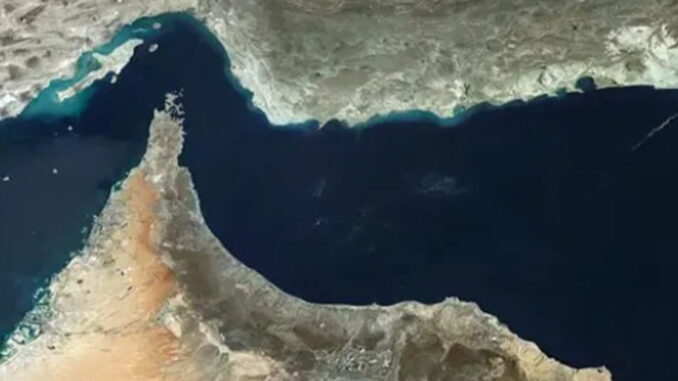
The main point of contention this time is the passage of ships through the Strait of Hormuz, which was effectively halted by the Islamic Republic during the recent war and turned into a weapon. If previously the danger of the Islamic Republic acquiring nuclear weapons was seen as a long-term strategic threat to regional stability, now the regime, by blocking this vital artery for oil and key goods, has taken the global economy hostage and poses an immediate and direct threat to the entire world.
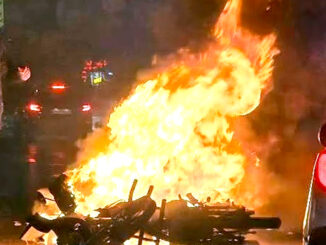
In this way, the survival crisis of the Islamic Republic has now taken on a fully global dimension. A regime that for 48 years has shouted “death to America and Israel” and mobilised Islamist terrorism in the region to suppress the people of Iran and secure its own survival, now—after suffering heavy and repeated blows and even after the street massacre of tens of thousands in January failed to remove its fear of a popular revolution—has resorted to choking the global economy through the Strait of Hormuz in a desperate attempt to prolong its disgraceful existence. In other words, open blackmail of the world has now been added to executions, prisons, terror, missiles, drones and uranium enrichment as tools of the regime’s survival.
This is by no means a sign of strength or confidence in survival. On the contrary, it reflects the regime’s desperation and lack of any future perspective. If the January massacres were a clear declaration that the Islamic Republic had reached the end of the line in the face of a revolutionary people and could only survive through executions, prisons and bloodshed, its current actions—attacking the region and blocking the Strait—amount to a declaration of war on the world itself. The Islamic Republic is in its final stages. Yet it shows no hesitation in spreading further bloodshed across Iran, the region and beyond in its struggle to survive. It now resembles a suicide attacker, with the Strait of Hormuz strapped to itself like an explosive belt, threatening the world that if its survival is endangered, it will detonate.
At this point, the entire world must stand firmly with the people of Iran and their revolution to overthrow the Islamic Republic. Recent events once again confirm what the people of Iran have long experienced with their own lives and sacrifices: the complete overthrow of the Islamic Republic is the first condition for achieving peace, freedom and prosperity in Iran and the region.
Unfortunately, a major obstacle to the Iranian revolution has been the ongoing tolerance and support the regime has received—not only from powers such as China and Russia, but also from the Western bloc and the United States, which, despite criticism, have pursued policies of appeasement aimed at gradually transforming the regime into something more acceptable. Even in the recent wars, the main objective of U.S. policy has been to force the regime into submission and “change its behaviour.”
Now is the time for the world to recognise that the Islamic Republic has no legitimacy as the government of Iran. It is the killer of the Iranian people and has no right to represent them anywhere. If there was ever any doubt, the January bloodbath, mass arrests, executions, and the presence of Hezbollah and Hashd al-Shaabi in the streets should have removed it. In short, these are a group of criminals who have taken not only the lives and freedoms of Iranians hostage, but now also grip the throat of the world.
Therefore, the current ceasefire is not only fragile and liable to collapse into a wider war at any moment, but even if it holds or leads to agreements, it will not remove the underlying conditions for future conflict. The Islamic Republic’s survival depends on anti-Westernism, political Islam and regional militarism, which will continue to generate tension and war. As we have repeatedly stated, overthrowing the Islamic Republic is the necessary condition for ending war. The sufficient condition is the direct empowerment of the people—the victory of the Woman, Life, Freedom revolution, which represents a future based on peace, cooperation, equality and human dignity.
If the 39-day war has taught anything, it is that the overthrow of the Islamic Republic is the task of the Iranian people’s revolution. The best step the United States and other governments can take is not war, compromise or appeasement, but a comprehensive boycott and total isolation of the regime. The Islamic Republic must be treated like the apartheid regime in South Africa—rejected globally, recognised as a perpetrator of crimes against humanity, and its leaders brought before justice.
Achieving this requires broad international public support for the struggle of the Iranian people, especially the Woman, Life, Freedom movement. Progressive movements worldwide—such as the “No King” movement in the United States—must build solidarity with this revolution. These struggles are part of a global effort to rid the world of oppressive regimes.
At the same time, serious obstacles must be confronted. In particular, we must oppose two reactionary tendencies that ultimately serve the regime. First, the pro-regime “anti-war” current, rooted in outdated anti-Americanism and apolitical pacifism, which includes sections of the traditional left and nationalist-Islamic movements. Second, the pro-war, pro-Trump and pro-Netanyahu current represented by monarchists, who seek to channel people’s justified anger into reliance on foreign powers and undermine the revolution. Both tendencies strengthen one side of the current war and ultimately serve the continuation of the regime.
We emphasise: the fastest and most decisive way to end the war and achieve lasting peace is the overthrow of the Islamic Republic and the victory of the Woman, Life, Freedom revolution.
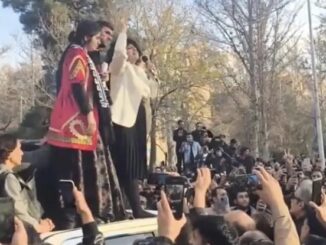
This revolution is not only the answer of the Iranian people to the Islamic Republic and its crimes—it is also a gift to the world and a solution to the danger created by the regime’s war policies. This revolution remains alive and powerful. The executions during the war, the threats by officials, the mass arrests, the deployment of militias, the checkpoints, the people’s mourning and resistance, their solidarity and mutual aid—all testify to a deeply rooted revolutionary movement. A people who, even amid destruction and loss, count the fall of the regime’s agents as a sign of hope—and who will return to the streets at the right moment to bury this regime once and for all in the dustbin of history.
This revolution has not retreated in the face of war—it has hardened, learned, and is preparing to rise again with greater strength to break the current deadlock.
Down with the Islamic Republic
Long live the Woman, Life, Freedom revolution
Worker-communist Party of Iran
14 April 2026
AI-assisted translation, from the original Farsi