By Hamid Taqvaee – 12 April 2026
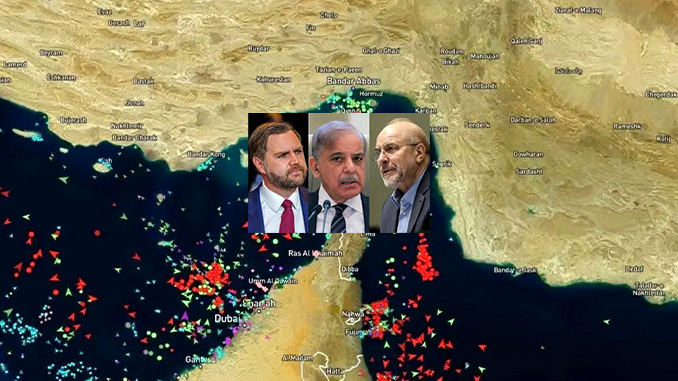
The deadlock in the Islamabad negotiations is itself a product of the deadlock in the 40-day war. By controlling the Strait of Hormuz, the Islamic Republic has gained a new lever to exert pressure on the United States and Israel. It was essentially this development that pushed Trump towards negotiations. They hoped that, after delivering heavy blows to the regime, they could force it to accept their conditions—chief among them now being the reopening of the Strait of Hormuz. But this has not happened. It appears that the Islamic Republic intends to retain the Strait of Hormuz card in order to extract further concessions on uranium enrichment, support for proxy forces, and related issues.
However, for the regime, closing the Strait of Hormuz is a double-edged sword. Not only the United States and Israel, but the entire world cannot tolerate the strangling of this critical artery of the global economy for long. If uranium enrichment and the prospect of the Islamic Republic acquiring nuclear weapons represent a long-term strategic threat for the West, then control of the Strait of Hormuz poses an immediate and tangible threat to the global economy—one that, from the perspective of all governments, must be resolved quickly and by any means necessary.
The rulers of Iran present control of the Strait of Hormuz as a symbol of power and victory, yet they are fully aware that using this tool could rapidly backfire. It could mobilise all regional countries, Europe, and many Asian states—whose vital interests depend on the free flow of shipping through the Strait—against the Islamic Republic. How this issue will ultimately be resolved depends entirely on the course of events and the actions of both sides during the two-week ceasefire period and what follows. Whatever the outcome, one point is clear: the result of these negotiations is directly tied to the fate of the Strait of Hormuz. It is also clear that even if the issue of the Strait is resolved and a stable ceasefire is maintained, the problem of war—and the cycle of war–negotiation–war—will not come to an end.
Hostility toward the West and the slogans of “death to America” and “death to Israel” are integral to the very identity of the Islamic Republic. This is what fuels war, tension, and a constant atmosphere of conflict in the region. At the same time, if the regime were to retreat from this fundamental policy, it would be undermining its own existence. The regime will do everything it can to save its half-dead body from the blows of the “Great Satan” and the “Zionist regime,” but it cannot abandon confrontation with these “enemies of Islam.” This is because both its ideological foundation and its political practice—one of its constant tools for suppressing the people—are rooted in this conflict.
The issue of anti-Westernism and the war-making policies associated with it can only be resolved by the people of Iran. The ultimate solution is the overthrow of the Islamic Republic. Governments neither want nor are able to overthrow it. Their stated aim is, at most, what they call a “change in behaviour”—that is, forcing the regime to abandon its nuclear and missile policies and its support for proxy forces. But even achieving these goals ultimately depends on the overthrow of the regime.
For any revolutionary and freedom-seeking force, under all conditions, the central focus must be the overthrow of the Islamic Republic. Our party consistently pursues this policy in times of war, peace, negotiation, and ceasefire alike. In the current situation, although the regime has gained a new bargaining lever in relation to foreign governments, its position vis-à-vis the people is weaker, more fractured, and more unstable than ever. This situation must be utilised to actively organise and strengthen the ranks of the people. The campaign of joint action against executions, for the release of political prisoners, for an end to arrests, and for the restoration of internet access—launched by more than 130 parties and organisations—can be a first step in this direction.
As far as the policies of Western governments and international institutions toward the Islamic Republic are concerned, our demand is clear: boycott the regime. It must be said to all governments that war, military intervention, compromise, economic sanctions, and similar measures will not resolve the issue. Do not recognise the Islamic Republic as the government of Iran. It does not represent the people—it is their executioner. Just look at the recent negotiating team in Islamabad: all of them have blood up to their elbows. Their place is behind prison bars, not at the negotiating table. The Islamic Republic must be rejected and isolated internationally, just as the apartheid regime in South Africa once was. This is the most effective step the civilised world can take in support of the ongoing struggle of the people to overthrow this criminal regime.
12 April 2026
AI-assisted translation, from the original Farsi