Hamid Taqvaee – 14 April 2026
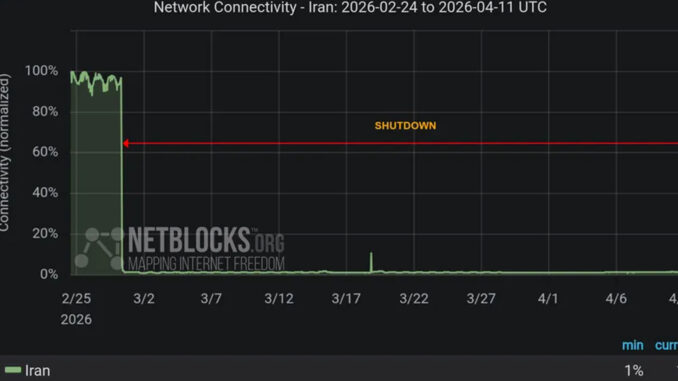
In the final week of the recent war, the issue of attacks on infrastructure became a major topic, with many anti-war voices emphasising the damage caused by targeting bridges and power plants. Now, Afshin Kolahi, an official from the Iran Chamber of Commerce, states: “The direct losses from internet shutdowns amount to 30 to 40 million dollars per day, and indirect losses to around 70 to 80 million dollars per day. This is equivalent to losing two medium-sized power plants and two major bridges every single day.”
Multiply these figures by 46 days to grasp the scale of the disaster. It becomes clear that the greatest damage to infrastructure has been inflicted by the Islamic Republic itself—not against the United States or Israel, and not only through deliberate attacks on industrial sites and residential areas in Qatar, Bahrain, and the UAE, but in its war against the people inside Iran. The issue is not merely economic damage. Already, millions of families who relied on the internet for their livelihoods have been pushed into extreme hardship and destitution.
War crimes are usually committed by opposing sides against each other. But in this respect too, the Islamic Republic is an exception. It is a government that, even while under enemy bombardment, commits war crimes against its own people. The internet blackout, alongside executions, mass arrests, street checkpoints, and the deployment of militias such as the Fatemiyoun, Zeynabiyoun and Hashd al-Shaabi in the streets, are all part of these war crimes. Crimes that are, in fact, a continuation of the horrific January massacres under wartime conditions.
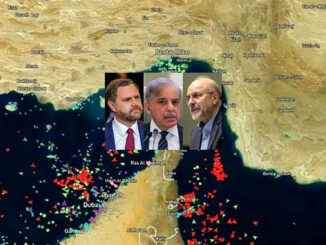
It must be said that a major portion of the damage and suffering caused during the 39-day war against the people of Iran has been inflicted—directly or indirectly—by the rulers of Iran themselves. And with the Islamic Republic’s closure of the Strait of Hormuz, these consequences are now on the verge of taking on global dimensions. Shutting down the internet is, in fact, the domestic counterpart to closing the Strait of Hormuz: one chokes the people of Iran, the other chokes the global economy. Both are part of the final desperate acts of a blood-soaked regime willing to commit any crime to survive.
The global campaign of joint action by more than 130 parties and organisations against internet repression, arrests and executions must be actively supported. Internationally, the banner of Woman, Life, Freedom—already embraced by freedom-loving people around the world—must be raised, and governments and international institutions must be called upon to reject and boycott the Islamic Republic for its crimes in Iran and globally.
14 April 2026
AI-assisted translation, from the original Farsi